
You’ve had your blood pressure checked dozens of times – at the doctor’s office, the pharmacy, maybe even at home. But when the nurse rattles off “120 over 80,” do you actually know what those numbers mean?
Understanding your blood pressure readings is one of the most valuable things you can do for your long-term health. These two simple numbers offer a window into how hard your heart is working and the condition of your blood vessels.
What Is Blood Pressure?
Blood pressure measures the force of blood pushing against your artery walls as your heart pumps. Think of it like water pressure in a garden hose – too little and nothing flows properly, too much and you risk damage to the system.
Your blood pressure reading consists of two numbers, written as one over the other (like 120/80). Each tells a different part of the story.
The Two Numbers Explained
Systolic Pressure (The Top Number)
The systolic reading measures the pressure in your arteries when your heart beats – the moment of maximum force as blood is pushed out into circulation.
This number tends to get more attention because it rises more noticeably with age and is a strong predictor of cardiovascular risk, especially in people over 50.
Diastolic Pressure (The Bottom Number)
The diastolic reading measures the pressure in your arteries between heartbeats – when your heart is resting and refilling with blood.
While often considered the “less important” number, diastolic pressure matters too. Elevated diastolic readings can indicate stiff arteries or other cardiovascular concerns, particularly in younger adults.
Blood Pressure Categories
The American Heart Association classifies blood pressure into five categories:
Normal: Less than 120/80 mmHg
Both numbers fall within the healthy range. Your cardiovascular system is functioning well, and your risk of heart disease and stroke is lower.
What to do: Maintain healthy habits. Continue monitoring periodically to catch any changes early.
Elevated: 120-129 / less than 80 mmHg
Your systolic pressure is creeping up, but diastolic remains normal. This is a warning sign that you may develop high blood pressure if you don’t make changes.
What to do: Focus on lifestyle modifications – diet, exercise, stress management. No medication is typically needed at this stage.
High Blood Pressure Stage 1: 130-139 / 80-89 mmHg
You’ve crossed into hypertension territory. At this stage, your doctor will likely recommend lifestyle changes and may consider medication depending on your overall cardiovascular risk.
What to do: Work with your healthcare provider to develop a plan. Lifestyle changes can often bring numbers back down.
High Blood Pressure Stage 2: 140+ / 90+ mmHg
This is more serious hypertension. Most doctors will prescribe medication alongside lifestyle modifications at this stage.
What to do: Follow your doctor’s treatment plan closely. Consistent monitoring becomes especially important.
Hypertensive Crisis: Higher than 180 / higher than 120 mmHg
This is a medical emergency. If you see numbers this high, wait five minutes and test again. If readings remain severely elevated – especially with symptoms like chest pain, shortness of breath, back pain, numbness, vision changes, or difficulty speaking – seek emergency care immediately.
What Affects Your Blood Pressure?
Blood pressure isn’t static. It fluctuates throughout the day based on numerous factors:
Time of day – Blood pressure typically dips during sleep and rises in the morning. It’s usually highest in the late afternoon.
Physical activity – Exercise temporarily raises blood pressure, which is normal and healthy. Regular exercise actually lowers your resting blood pressure over time.
Stress and emotions – Anxiety, anger, and excitement all cause temporary spikes. Chronic stress contributes to sustained elevation.
Food and drink – Caffeine, alcohol, and high-sodium meals can temporarily raise readings. A consistently poor diet contributes to long-term hypertension.
Body position – Readings can vary depending on whether you’re sitting, standing, or lying down.
Full bladder – This can add 10-15 points to your reading. Always use the bathroom before measuring.
Talking – Speaking during measurement can elevate your numbers. Stay quiet and still.
Temperature – Cold environments can temporarily raise blood pressure.
Why Tracking Matters
A single blood pressure reading is just a snapshot. What really matters is the pattern over time.
“White coat hypertension” – elevated readings at the doctor’s office due to anxiety – affects up to 30% of people. Conversely, some people have normal readings at appointments but elevated pressure in daily life (“masked hypertension”).
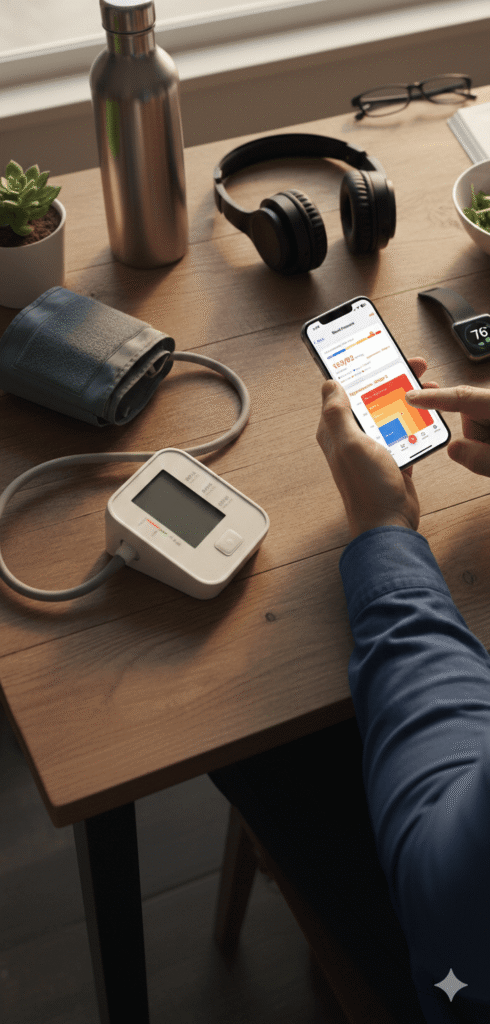
Regular home monitoring gives you and your doctor a much clearer picture of your true blood pressure. It helps:
- Identify patterns and triggers
- Track the effectiveness of lifestyle changes or medications
- Catch problems early before they cause damage
- Reduce anxiety about occasional high readings
Tips for Accurate Home Readings
Getting reliable measurements at home requires some attention to technique:
Rest first. Sit quietly for 5 minutes before measuring. No exercise, caffeine, or smoking for 30 minutes prior.
Position matters. Sit with your back supported, feet flat on the floor, and arm resting on a flat surface at heart level.
Use the right cuff size. A cuff that’s too small or too large will give inaccurate readings. Most monitors come with sizing guides.
Measure consistently. Check at the same time each day – morning and evening readings are most useful.
Take multiple readings. Measure 2-3 times with a minute between each. Record the average.
Don’t obsess over single readings. One high number doesn’t mean you have hypertension. Look at trends over days and weeks.
The Silent Danger
High blood pressure is called the “silent killer” for good reason. It rarely causes noticeable symptoms until serious damage has occurred. You can have dangerously elevated pressure for years without feeling anything unusual.
This is why regular monitoring matters so much. The damage from chronic hypertension accumulates slowly:
- Arteries become stiff and narrow
- The heart works harder and may enlarge
- Risk of heart attack, stroke, kidney disease, and vision loss increases
- Small blood vessels in the brain can be damaged, affecting cognition
The good news? Catching elevated blood pressure early and taking action can prevent or reverse much of this damage.
Lifestyle Changes That Work
If your numbers are elevated, these evidence-based strategies can help:
Reduce sodium intake. Aim for less than 2,300 mg daily – ideally closer to 1,500 mg. Most sodium comes from processed and restaurant foods, not the salt shaker.
Follow a heart-healthy diet. The DASH diet (Dietary Approaches to Stop Hypertension) has been shown to lower blood pressure significantly. Focus on fruits, vegetables, whole grains, and lean proteins.
Exercise regularly. Aim for at least 150 minutes of moderate activity per week. Even daily walking makes a difference.
Maintain a healthy weight. Losing even 5-10 pounds can noticeably reduce blood pressure if you’re overweight.
Limit alcohol. Stick to moderate consumption – one drink per day for women, two for men.
Manage stress. Chronic stress contributes to hypertension. Find healthy outlets – exercise, meditation, hobbies, time with loved ones.
Quit smoking. Smoking damages blood vessels and raises blood pressure. Quitting has immediate and long-term benefits.
Get enough sleep. Poor sleep is linked to higher blood pressure. Aim for 7-9 hours of quality rest.
When to See a Doctor
Schedule an appointment if:
- Your readings are consistently above 130/80
- You notice a significant change from your usual numbers
- You experience symptoms like severe headaches, chest pain, vision problems, or difficulty breathing
- You’re already on medication and your numbers aren’t improving
Remember – high blood pressure is highly treatable. Early detection and consistent management dramatically reduce your risk of serious complications.
This article is for informational purposes only and is not intended as medical advice. Always consult a qualified healthcare provider for diagnosis and treatment of blood pressure concerns.
Take control of your health with Pul AI. Track your blood pressure readings over time and spot trends before they become problems. Download the app and start building a clearer picture of your cardiovascular health.